Why the Small Details in Employee Presentation Matter
Most customer-facing businesses get the big things right. The uniform is ordered, the logo is on the polo shirt, and staff know the dress code. It is the smaller, easier-to-overlook details that tend to drift over time: the belt someone swapped in from home, the badge that has gone missing and never been replaced, the mismatched buckle nobody thought was worth mentioning.
None of these things sinks a business on their own. But taken together, they're often the difference between a team that looks genuinely coordinated and one that looks like it's wearing the same uniform for different reasons. If you manage a customer-facing team, it's worth understanding why these small details slip and what a sensible, proportionate fix looks like.
What "consistent presentation" actually covers
A uniform policy usually specifies the obvious items: shirt, trousers or skirt, footwear colour, maybe an apron or jacket. What it often doesn't specify is everything worn alongside the uniform. Belts, buckles, name badges, lanyards, watches and even the general condition of the uniform itself are frequently left to individual judgement.
That gap is where inconsistency creeps in. One member of staff wears a plain black belt with a standard buckle. Another wears whatever belt they already owned, in a different colour or finish. A third has lost their original belt entirely and has improvised. Individually, none of this looks like a problem. Stood next to each other on a shop floor or behind a reception desk, the inconsistency becomes more noticeable.
Why the details customers rarely mention still register
Customers don't typically comment on a mismatched buckle or a scuffed badge. That doesn't mean they don't notice, even briefly and without consciously registering it. A team that looks coordinated tends to read as organised and attentive; a team with visible inconsistencies, even minor ones, can read as less careful, even where the actual service is identical.
It's also worth being clear about where the line sits legally. Employers are entitled to set standards for staff appearance, provided the requirements are reasonable, applied consistently and don't discriminate against particular groups of staff. Acas guidance notes that employers may set a policy establishing a reasonable standard of dress and appearance for their organisation, and that any such policy should be non-discriminatory and applied equally to staff. If you're tightening up a presentation standard, it's sensible to write it down, apply it evenly and be clear about the business reason behind it, rather than relying on informal expectations that different staff interpret differently.
Where the drift usually starts
In practice, the details that slip are almost always the ones nobody has explicitly owned. Uniform items get replaced through a standard ordering process; the smaller accessories often don't. A few common patterns:
- New starters are given a uniform but not told what belt or buckle to wear with it, so they use their own.
- Worn or lost belts get replaced informally, sometimes with whatever is on hand.
- Badges and buckles from an earlier design are still in circulation alongside newer stock after a rebrand.
- Seasonal or part-time staff are onboarded quickly and the smaller details get skipped.
None of this happens through carelessness. It happens because nobody has been made responsible for the detail, and because it's genuinely a low priority compared with rotas, training and stock.
Practical ways to close the gap
The fix doesn't need to be elaborate. A short, written note on what accessories are expected—belt colour, buckle style, badge placement—closes most of the gap on its own, because it gives new and existing staff something concrete to follow rather than a general impression of "smart."
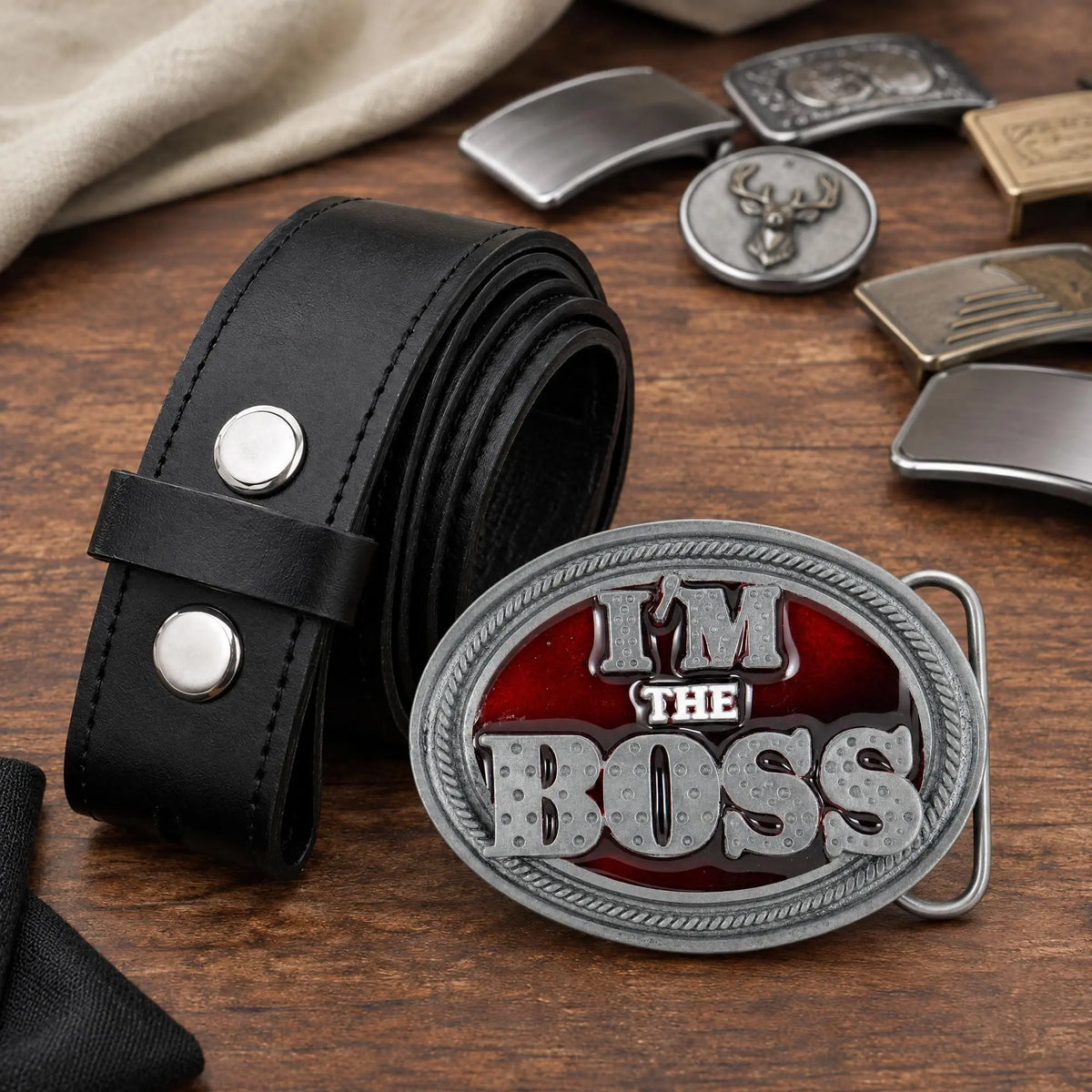
For teams where a belt is a visible, fixed part of the uniform, a branded buckle is one practical way to make that particular detail consistent without relying on individual judgement. Rather than staff sourcing their own belts and buckles, the whole team wears the same one, carrying the company's logo or mark. It's a small, fixed point of consistency that doesn't need reinforcing once it's in place. A solid brass buckle can also be a durable option where the goal is a secure fit and a more substantial finish.
This only makes sense for teams above a certain size, since custom manufactured buckles are produced from a bespoke mould and typically have a minimum order of 30 units. Pricing improves at larger quantities, prices are quoted excluding VAT, and production usually takes up to six weeks from design approval once the artwork is signed off—worth building into any rebrand or uniform refresh timeline. Flash My Buckle's custom belt buckle page sets out the process in more detail for teams considering it. For a single manager's belt or a one-off gift rather than a team order, a personalised buckle is the more suitable route, though it won't achieve the same team-wide consistency.
Keep it as a standard, not a one-off purchase
Whatever you decide on belts, badges or any other visible detail, the value comes from treating it as an ongoing standard rather than a single order. Build the expected accessories into new-starter onboarding, keep a small stock of replacements so staff aren't left to improvise, and review the standard whenever the uniform itself changes.
None of this needs to be dramatic. The businesses that look consistently put-together usually aren't doing anything unusual—they've simply decided that the small details are worth deciding on, rather than leaving them to chance.